Every successful event begins long before the first guest arrives—and ends long after the last chair is stacked away. What people see on the day is only the final frame of a much larger story. This case study is about one such journey: a pastel-dream wedding event that moved seamlessly from concept to curtain call, executed by doon decors and exhibits, widely regarded as the best event management company for experiential and design-driven celebrations.
Understanding the Vision
The brief was deceptively simple: “We want something elegant, soft, and memorable—nothing loud, nothing overdone.”
But simplicity, when done right, is often the hardest thing to achieve.
The event was planned as a daytime celebration, hosted on an open lawn. That single detail shaped every design decision—from colour palette to fabric choice, from seating layout to stage orientation. Natural light was not something to fight; it was something to design with.
The core inspiration revolved around:
- Pastel pink tones
- Floral abundance without clutter
- Comfort-led seating
- A balance between luxury and warmth
Designing the Space, Not Just the Décor
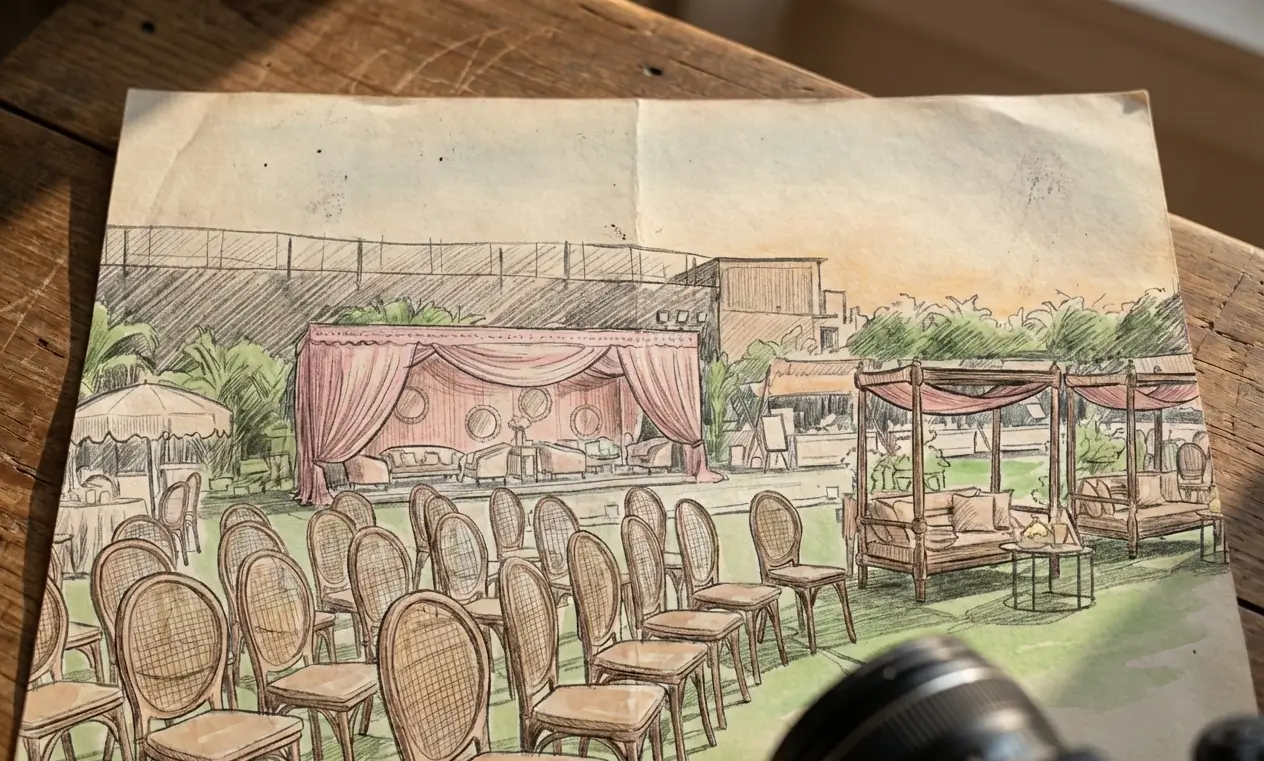
Instead of treating décor elements as individual installations, doon decors and exhibits approached the venue as one continuous experience.
The lawn was zoned intentionally:
- A central stage area that acted as the visual anchor
- Guest seating aligned to maintain clear sightlines
- Lounge-style cabana seating for relaxed conversations
- Open pathways to avoid congestion and preserve flow
The chairs—classic cane backs with neutral cushions—were selected not only for aesthetics but also for comfort during a daytime function. Their warm wood tone subtly grounded the pastel-heavy environment, preventing the setup from feeling flat or overly themed.
The Stage That Set the Tone
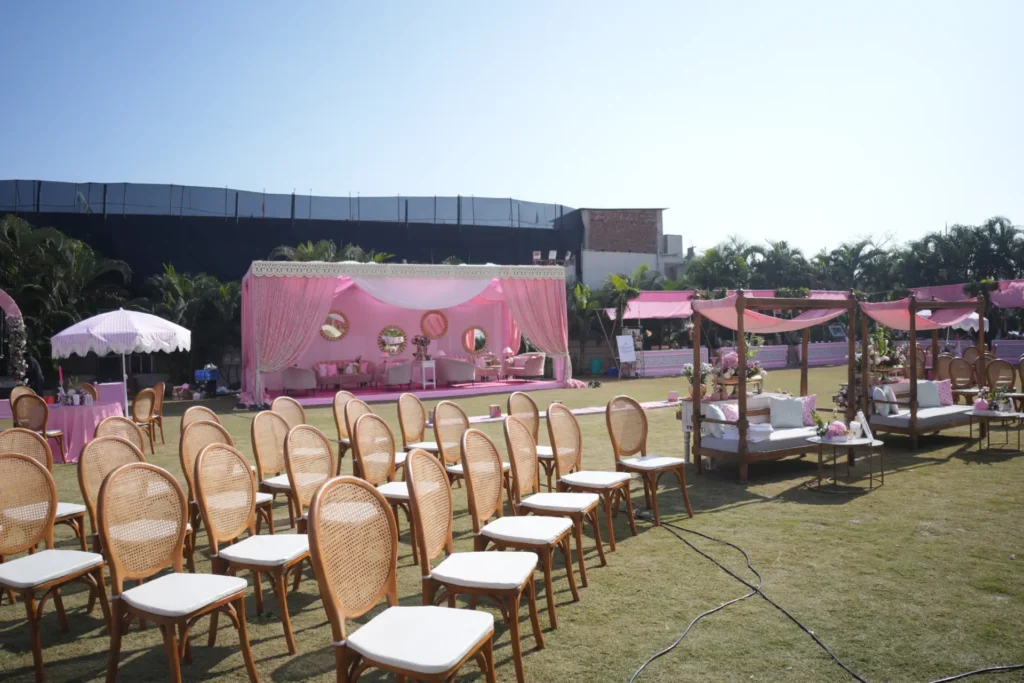
The main stage was where concept met craftsmanship.
Soft pink drapes framed the structure, layered with delicate textures that caught the daylight beautifully. Instead of heavy floral hoardings, circular reflective elements were introduced at the back—adding depth, light play, and a sense of openness.
The floral palette leaned into whites, blush pinks, and muted mauves, allowing the stage to feel lush without overpowering the surroundings. Seating on the stage followed the same design language: plush, comfortable, and inviting—because a stage should feel lived-in, not just photographed.
This is where the best event management company mindset really shows—when design choices support both aesthetics and functionality.
A Mandap That Felt Like a Garden Pavilion
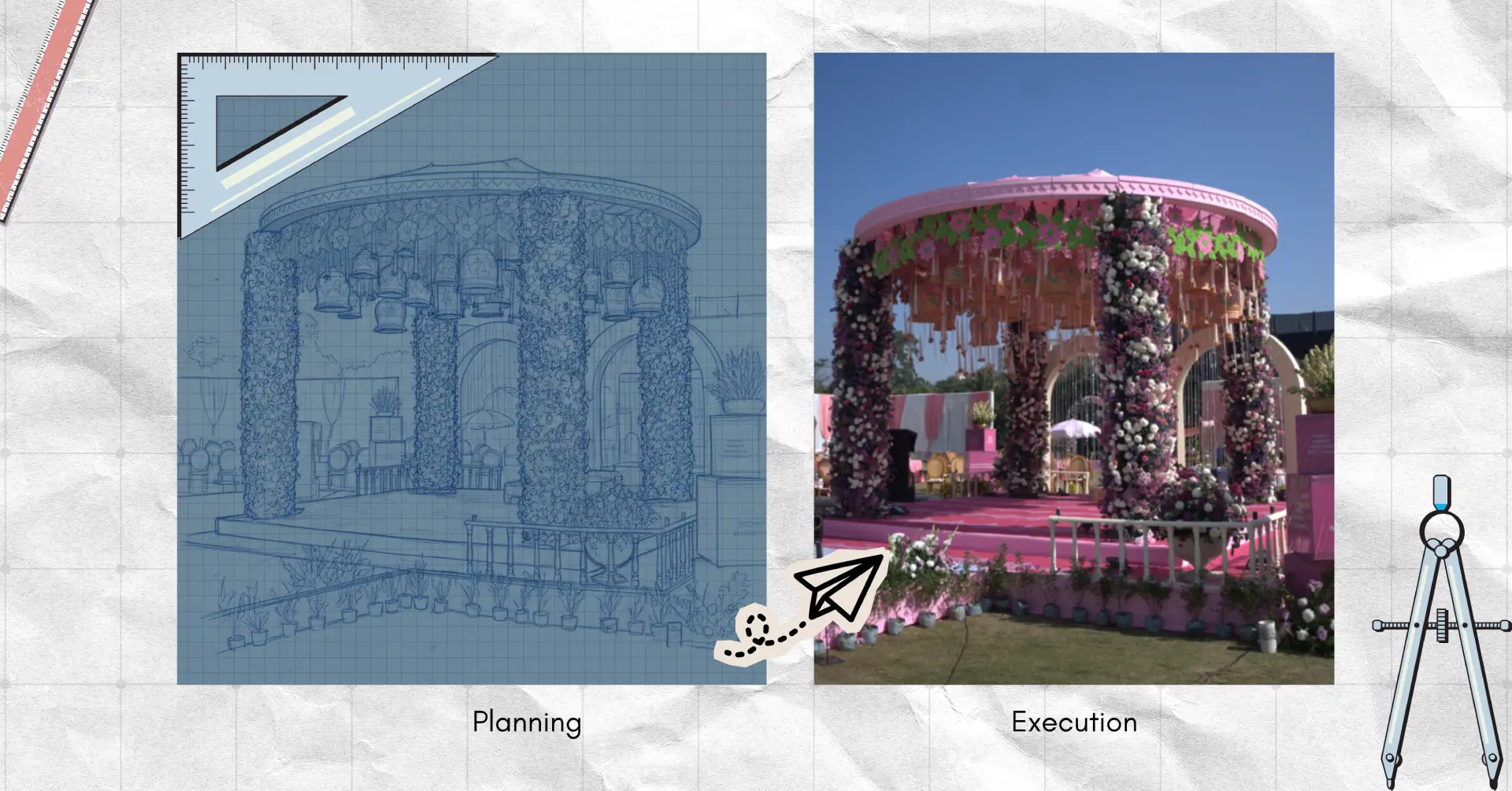
One of the most striking elements of the event was the mandap structure.
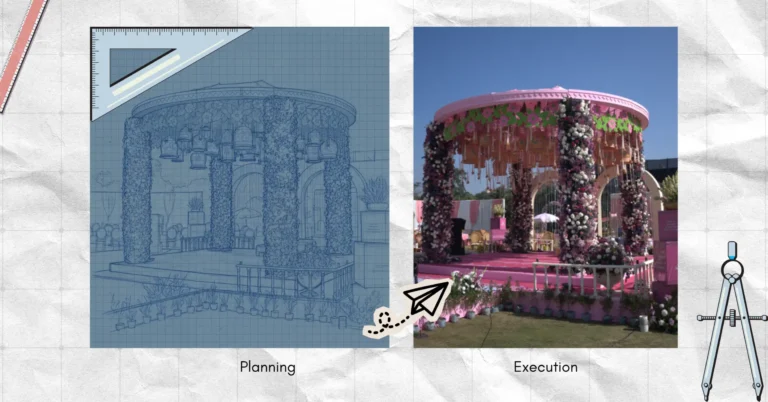
Circular in form and elevated slightly above ground level, it was wrapped with cascading florals and hanging elements that moved gently with the breeze. The pastel pink canopy tied it visually to the main stage, ensuring design continuity across the venue.
The detailing mattered:
- Floral density was heavier at the pillars, lighter at the top
- Hanging elements added vertical interest without blocking sightlines
- Subtle lighting enhanced textures rather than washing them out
This mandap wasn’t just a ceremonial space—it became one of the most photographed corners of the event.
Execution Day: Where Planning Is Tested
Event day is where even the best designs can fall apart—unless execution is airtight.
From early morning installations to last-minute alignment checks, the team at doon decors and exhibits worked with clockwork precision. Power cables were hidden, sightlines rechecked, seating symmetry corrected down to inches. Even the smallest details—like floral placements on side tables—were reviewed with the same seriousness as the main structures.
That’s the difference between decorators and a best event management company—the latter knows that perfection lives in the details no one consciously notices.
Guest Experience at the Center
While the visuals did the talking, the real success of the event was how guests felt in the space.
There was room to move, to pause, to sit, to talk. The cabana seating offered shaded comfort. The open lawn never felt cluttered. Every angle felt intentional, every corner complete.
Guests didn’t just attend the event—they stayed, explored, and engaged.
Curtain Call: Measuring Success Beyond Photos
When the event wrapped up, what remained wasn’t just a gallery of stunning photographs—it was feedback.
Words like “tasteful,” “well thought out,” and “effortlessly beautiful” echoed across conversations. And that, more than anything, marked the success of the project.
This case study stands as proof that when design thinking, execution discipline, and emotional understanding come together, the result is more than an event—it becomes an experience.